How to Choose the Best Outdoor Lounger for Your Lifestyle

An outdoor lounger defines your outdoor space, shaping its appearance and how you choose to spend time there.
When you select the right lounger, you make several practical decisions. Material affects durability and upkeep, comfort influences how often you use the piece, and scale determines how naturally the lounger fits into your layout.
This guide clearly explores each factor, helping you choose a lounger that suits both your home and lifestyle.
1. Start With How You’ll Use Your Lounger
First, consider how you will use your outdoor lounger or outdoor lounge chair before comparing finishes or designs.
Will it sit beside a pool in direct sun? Is it placed on a sheltered patio? Do you prefer a more upright position or a fully reclined afternoon rest?
A pool lounger needs different qualities than one under a partial cover. Let sun exposure and moisture guide your material choice, then, when you understand the practical demands, consider comfort details and footprint. Once the purpose of the lounger is clear, material becomes the next important decision.
2. Compare Materials: Teak, Aluminium, Rope and Fabric
Material choice shapes both appearance and maintenance, with climate playing an important role, particularly in coastal or high-humidity areas.
Teak Loungers
Teak remains a reliable choice for outdoor furniture. Its natural oils help it perform well outdoors, and over time, it develops a soft silver patina. A teak sun lounger brings architectural presence to landscaped gardens and coastal homes.
Occasional cleaning maintains its appearance, while some homeowners choose to oil or seal it to preserve its warmer tone, and others allow it to weather naturally.
Aluminium Loungers

An aluminium lounger offers a lighter visual presence and requires minimal upkeep, while powder-coated finishes resist corrosion and perform well in humid conditions.
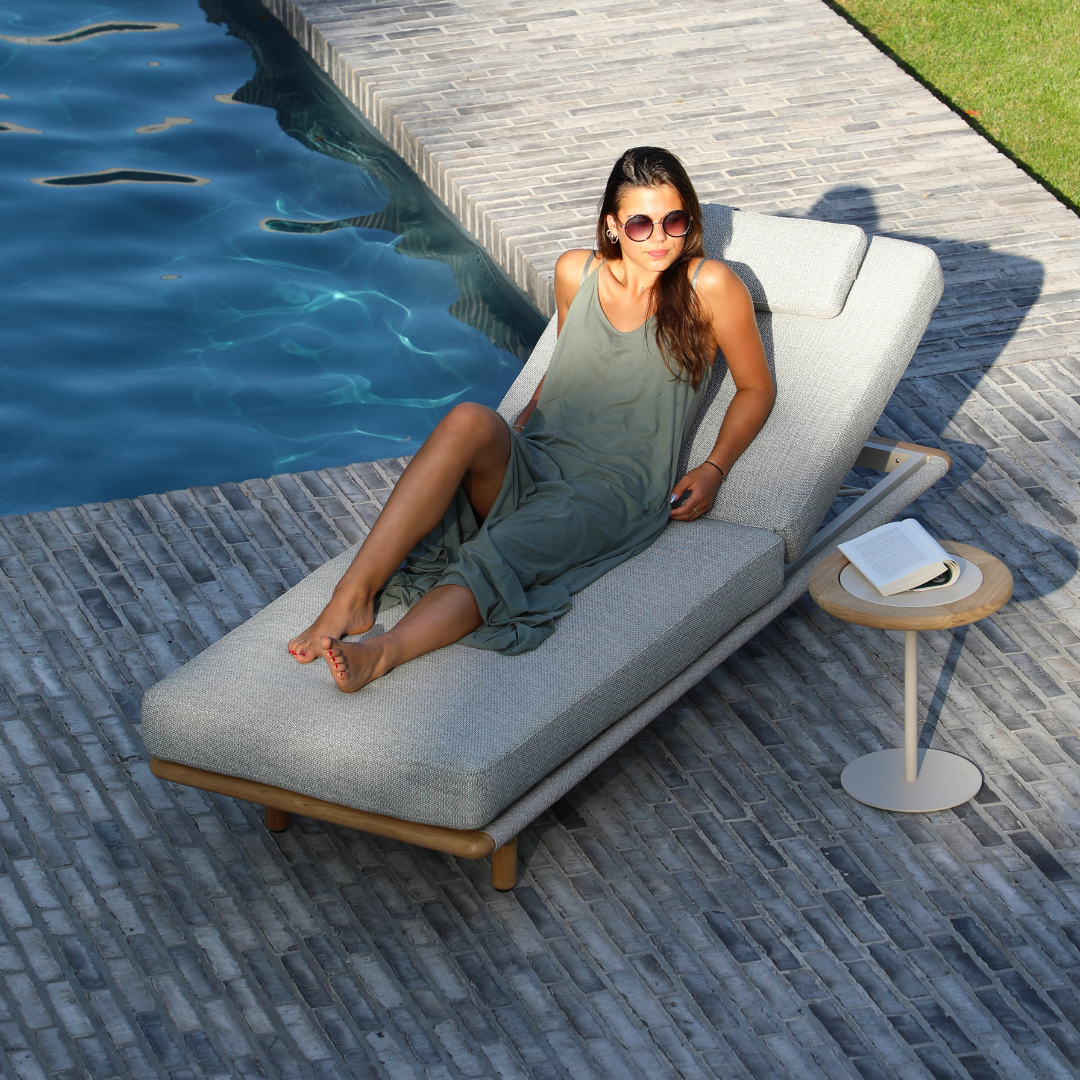
For modern terraces, a streamlined aluminium design keeps the setting feeling open rather than heavy. Our Twoo Sun Lounger works particularly well in this context, offering clean lines that suit contemporary architecture without dominating the layout.
If you would like to see how different materials and forms translate into finished pieces, explore our outdoor sun loungers collection to compare styles.
Rope and Fabric Combinations
Rope introduces texture while keeping the setting light and open, especially when paired with aluminium frames for a relaxed, refined look.
Outdoor performance fabrics for sling seating or cushions withstand everyday use. These combinations work especially well in pool areas where comfort and durability must work together.
3. Choose Comfort That Shapes the Experience
Comfort determines how often your outdoor lounge chair is used and how well it supports longer moments outdoors.
-
Adjustable backrests: A reclining backrest lets you adjust your position throughout the day. Multiple settings provide flexibility, especially if the lounger is used for reading or a quiet afternoon rest.
-
Armrests and structure: Armrests introduce subtle support and a sense of enclosure. In open poolside settings, an armless design creates a lighter form and keeps the overall silhouette visually streamlined.
-
Cushions and upholstery: Cushions shape the overall seating experience. Consider density and support if the piece will be used regularly. Neutral fabrics offer longevity, while textured materials introduce depth without overwhelming the setting.
Small details like these influence how inviting the lounger feels.
Once the material and comfort details are resolved, the final step is to understand how the lounger fits within your space.
4. Choose the Right Size and Layout

Every lounger should suit the proportions of your outdoor setting. A large frame can overpower a narrow deck, while a slim profile may feel lost on a broad terrace. Measure carefully and allow space around the piece so it settles naturally within the layout. In smaller courtyards, one refined lounger often creates a stronger impression than several smaller pieces.
For larger pool decks, symmetry can bring a sense of order. The Cannes Sun Lounger lends itself to a paired arrangement, giving the setting structure while keeping it open.
If you are furnishing a relaxed garden setting, the Faro Sun Lounger offers a clean, understated option for slower outdoor living.
5. Consider Style Direction and Design Cohesio

Your terrace lounger should relate to the architectural language of your home.
In contemporary settings, streamlined profiles and restrained detailing feel appropriate. In softer garden environments, warmer tones or textured elements introduce warmth without disrupting the mood.
Supporting pieces also influence the final result. A patio umbrella and base with a UV-resistant polyester canopy can provide shade while maintaining a refined design, and decorative lighting, such as our Spark Lamp in powder-coated aluminium, adds evening atmosphere without visually competing with the furniture.
When materials and scale relate naturally, the space feels cohesive.
6. Account for Maintenance and Climate Considerations
South African climates range from humid coastal regions to dry inland areas, so selecting the correct finish is essential for longevity.
Teak benefits from periodic care to maintain its appearance, while aluminium generally requires very little attention. Rope and outdoor fabrics respond best to gentle cleaning when needed.
Thoughtful placement and good airflow can help extend the life of your outdoor furniture without relying on seasonal covers. If assistance is needed, consult our care and maintenance guide.
Choosing a Lounger That Reflects Your Lifestyle
The best outdoor lounger is one that supports the way you naturally spend time outdoors.
If your time centres around the pool, durability and comfort become priorities, while evening use on the terrace emphasises silhouette and atmosphere.
In smaller environments, proportion becomes more important, and the right choice should feel natural within its setting so that, when the details are carefully resolved, the layout looks composed and intentional.
In larger homes and coastal properties, selecting luxury loungers in South Africa often requires balancing visual simplicity with materials suited to outdoor conditions.
Build an Outdoor Space That Works for You
Create an outdoor space that feels easy to live in, not something you have to constantly adjust or rethink.
Choose loungers that withstand South African conditions while providing lasting comfort, so your space works just as well for quiet mornings as for long, relaxed afternoons.
Explore the collection or speak to us for practical guidance on getting your layout right from the start!