How to Create a Cohesive Outdoor Living Space: A Designer’s Guide

A well-designed outdoor living space feels intentional, with each material connecting naturally to the next and finishes and tones working together in harmony. Every silhouette supports the overall mood, allowing the space to feel consistent from one piece to another, with nothing appearing added as an afterthought. The entire setting reads as one deliberate composition.
When cohesion is achieved, the result feels both serene and inviting, naturally drawing people in and encouraging them to linger.
Below, we share how we approach cohesive patio design at MØN Exteriors, from colour direction to layout planning and lighting balance, so you can shape an outdoor setting that creates visual calm.
1. Begin With a Clear Patio Colour Palette
Colour defines the mood of your outdoor living space, and without a balanced palette, even the most beautiful pieces can feel mismatched.
Take a moment to look around your home and note the existing surfaces and surrounding landscape, as these tones can guide the direction of your patio colour palette. By treating your outdoor space as a natural extension of your interior, you create a sense of continuity that feels both intentional and cohesive.
For more contemporary homes, soft neutral tones such as charcoal, sand or warm grey create a calm and balanced backdrop, keeping the space light, relaxed and easy on the eye. Introducing slightly deeper hues adds gentle contrast against lighter elements, helping to ground the space while maintaining a sense of harmony.
2. Choose Complementary Materials for Cohesion

Material selection is one of the most powerful tools in modern outdoor styling, as a cohesive outdoor space does not rely on a single finish. Instead, materials should work together, with each one supporting the overall look.
Aluminium introduces clarity and a refined edge, balanced by the warmth and natural depth of teak. Rope detailing introduces a softer layer, gently breaking up structured frames while adding texture. When combined with intention, these materials enhance one another rather than compete.
In our collections, this balance is expressed through material combinations and refined finishes. Our Wave Collection and our Cloud Collection pair powder-coated aluminium with softer detailing, while our Tolo Collection focuses on more uniform aluminium structures with clean, consistent finishes. Each range is distinct, yet all rely on continuity in material and tone.
If you introduce teak, repeat it across key pieces, such as a coffee table or dining surface, to make it feel integrated into the wider scheme. Limiting the number of finishes keeps the space clear and visually resolved.
3. Scale and Proportion: Designing for Visual Balance

An alfresco area should feel generous and open, as a sense of overcrowding is often where the flow begins to falter.
Before selecting furniture, assess the proportions of your patio or garden. A large terrace can carry deeper seating and broader dining tables, and a compact courtyard benefits from lighter frames and open bases that allow sightlines to flow.
Consider the ceiling height under pergolas and the width of pathways, ensuring enough space for movement between the conversation and dining areas so the layout feels natural and unconstrained. Outdoor flow is not only about how the space looks, but how it is experienced in use.
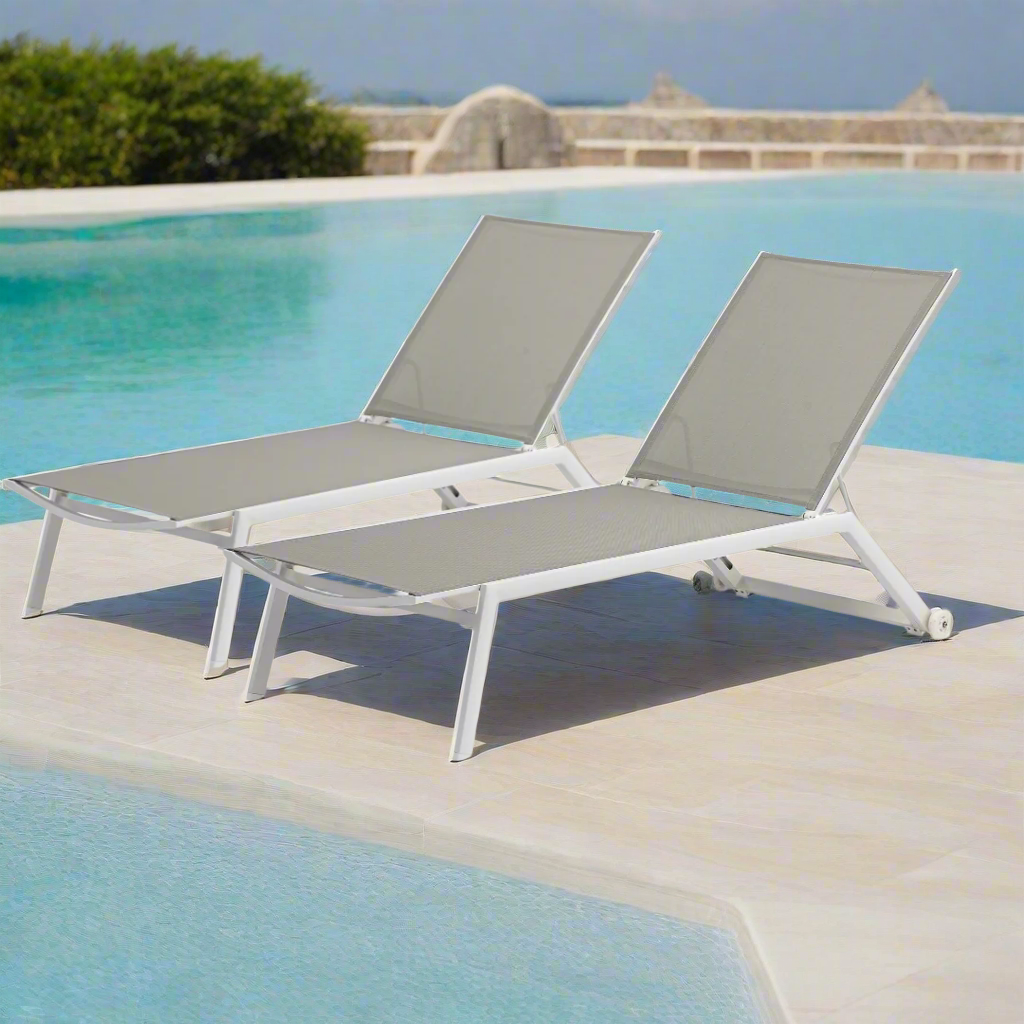
For instance, a Haven Sun Lounger positioned beside a pool needs space around it to feel intentional. When placed too close to a dining setting, the layout can feel compressed, while thoughtful spacing allows each zone to function independently while remaining visually connected.
4. Layout Planning: Creating Flow Between Zones
Design continuity extends beyond furniture selection. It lives in the way the areas connect.
Start by deciding how you’ll use your patio. Will you have casual seating for conversation? A dining area for long evenings? A quiet corner for reading? Make a loose plan before arranging pieces.
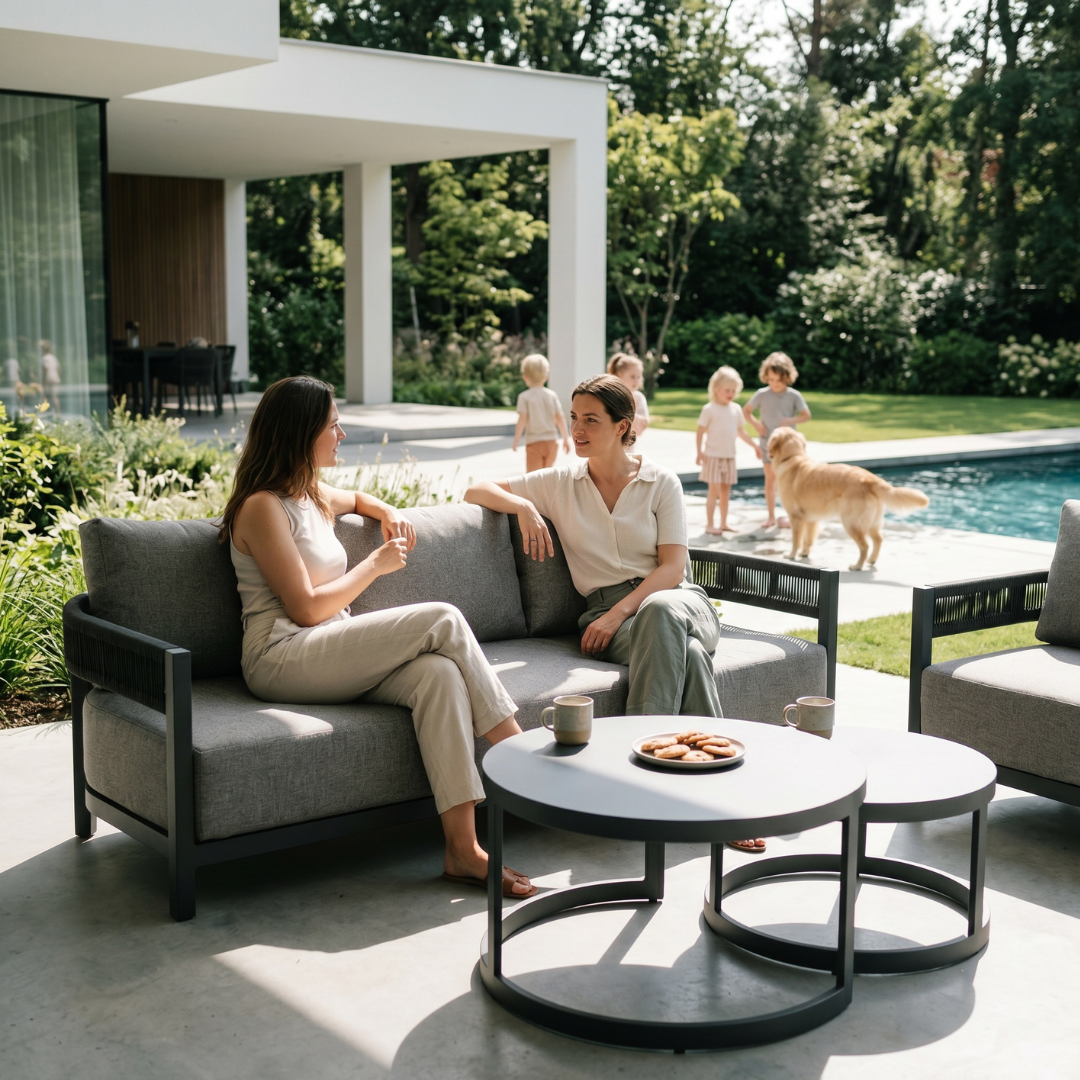
Arrange seating so people naturally face one another, anchoring each zone with a defining piece such as a low table or an outdoor rug while maintaining clear pathways that allow movement to feel comfortable. When layout planning is approached with intention, the entire area appears more composed.
Modern outdoor styling prefers subtle transitions. A change in orientation or material can show a new zone without breaking the visual rhythm.
5. Lighting Balance: Ambient Glow With Decorative Impact

Lighting is often underestimated in patio design, yet it plays a defining role in shaping the mood after dark and bringing architectural details into focus.
Use lighting in layers. Ambient light establishes a soft overall glow, while task lighting supports practical moments such as dining or reading. Accent lighting introduces depth by drawing attention to texture and sculptural elements. Balance is key here, as excessive brightness can flatten the atmosphere and take away from the overall effect.
Decorative lighting should feel integrated with the space. Our lamps are designed to sit comfortably alongside furniture silhouettes without dominating them. Our Spark Lamp, available in powder-coated aluminium for a more modern style, offers sculptural presence while contributing soft illumination. These are decorative, not fixed house lights.
Lamps placed near seating create a more intimate atmosphere, particularly when their placement feels thoughtful. Repetition in positioning further reinforces cohesion across the space.
Patio umbrellas add comfort and visual alignment. Our patio umbrella collection features polyester canopy fabric with protective coating and UV resistance. Select a tone that matches your furniture palette for a seamless look.
6. Styling Touches That Refine the Whole
Once core elements are in place, styling completes the story.
Cushions can reinforce your established palette, with variation in texture adding interest while the tones remain connected. A ceramic side table in a complementary shade can tie aluminium frames back to the surrounding stone. Even planters can emphasise your chosen material when carefully selected.
Be selective, as over-accessorising weakens impact. Pick a few outdoor décor ideas that improve comfort and style. Then step back and review the effect.
7. Define a Clear Silhouette Language

Cohesion relies on more than just colour and material; form plays an equally important role in how a space comes together.
Start by identifying your overall style, as most outdoor settings naturally lean toward either softer, more organic curves or a more defined, structured look.
Curves and Soft Geometry
If you use rounded frames, like those in our Pebl outdoor furniture, allow that same softness to carry through to other elements. A curved coffee table or arched chair back adds to the language.
Linear and Architectural Profiles
If your architecture is structured and minimal, it helps to carry that language through the outdoor space by leaning into clean, defined lines. Powder-coated aluminium frames with sharp edges naturally reinforce this sense of precision and complement the overall aesthetic.
Mixing Forms With Intention
Contrast can work beautifully when it feels deliberate and purposeful. For example, a sculptural lounge piece with softer curves can sit alongside a more architectural dining setting when they share a common element, such as a similar tone or material finish.
Shape should always feel intentional. Repeating a curve in a coffee table or echoing a clean line across different pieces helps create continuity, allowing the space to feel cohesive and well-balanced.
8. Create Atmosphere Through Layered Texture
Texture adds depth to a cohesive patio design. It introduces dimension without disrupting your established palette and prevents the area from looking overly polished or static.
Instead of introducing additional colour, focus on refining what is already there:
- Surface contrast: Introduce contrast between smooth and tactile surfaces to create subtle visual movement.
- Balanced structure: Pair structured frames with softer upholstery to temper strong architectural lines.
- Layered warmth: Layer textiles in similar shades to build warmth gradually.
- Natural variation: Use ceramic or stone to introduce subtle surface variation.
Each of these adjustments works within your existing design language, helping the space feel more unified. When texture is layered with care, an outdoor living space feels grounded and inviting, with a sense of ease that goes beyond purely decorative styling.
Bring Your Outdoors to Life With MØN Exteriors
With the right materials and layout, your space can work beautifully every day.
Create an outdoor living space that feels effortless, balanced and truly your own. Explore pieces that bring your vision together or connect with us to start shaping a space you’ll love spending time in.